
Tips for Negotiating an Exchange
Negotiating an exchange does not have to be difficult. Learn how to make thoughtful offers, understand the other person's preferences, make counteroffers, discuss differences in value, handle multiple offers, and reach an agreement that works for both sides.

Negotiating an exchange can be easier than you think
Finding an item you like is only the first step. Once you are interested in another member's listing, you may need to discuss what each person is willing to exchange before you can reach an agreement.
Negotiation does not have to mean arguing over who gets the better deal. A good exchange conversation is simply a way for both people to explain what they have, what they want, and what they are comfortable offering.
Sometimes two people agree immediately. Other times, the first offer does not quite work and a counteroffer leads to a better arrangement. In some cases, neither side can find a suitable exchange and the conversation ends without a deal.
All of these outcomes are normal.
The aim is to communicate clearly, understand the other person's position, and look for an exchange that makes sense for both sides.
1. Read the listing before making an offer
One of the easiest ways to have a better negotiation is to understand the listing before you start.
Look at the title, description, condition, photos, location, and exchange preferences.
If the owner has already explained what they are interested in receiving, take that information seriously. An offer that matches their preferences is more likely to start a useful conversation than an offer that ignores everything they wrote.
For example, if someone says they are mainly interested in books, board games, or small home items, offering a completely unrelated item may not be the best starting point.
You can still make a different offer when appropriate, but it helps to understand what the other person has already communicated.
2. Know what you are offering
Before starting a negotiation, make sure you understand the item you are offering as well as the item you want.
Think about its condition, age, size, functionality, accessories, and any defects.
If someone asks a question about your item, you should be able to answer accurately whenever possible.
A negotiation becomes much easier when both sides have useful information.
Be especially clear about condition
Do not wait until the negotiation is almost complete to mention an important problem with your item.
If there is a significant scratch, missing accessory, functional issue, repair, or other limitation, explain it early.
This prevents the other person from evaluating your offer based on information that turns out to be incomplete.
3. Start with a reasonable offer
Your first offer does not need to be perfect, but it should be meaningful.
Think about whether what you are offering is something the other person is likely to consider useful.
For example, a good starting message might be:
I am interested in your desk. I have a small bookshelf in good condition that I could exchange for it. The bookshelf is approximately 80 cm wide and has some minor cosmetic wear. I can send additional photos if useful.
This gives the other person enough information to understand the offer.
A less useful message would be:
Trade?
The second message leaves almost everything unanswered.
4. Explain why your offer might be useful
You do not need to write a sales pitch, but a short explanation can help.
For example:
I noticed you are interested in home office items, so I thought my monitor stand might be useful.
Or:
You mentioned that you are interested in board games. I have two games in very good condition that I would be open to exchanging together.
Showing that you paid attention to the other person's preferences can make the conversation more relevant.
5. Do not assume that two items must have identical monetary value
Exchanges are not always about finding two objects with exactly the same price.
Value can depend on many things:
- how useful the item is to someone,
- its condition,
- how much use it has received,
- how difficult it is to find,
- what accessories are included,
- its size and practicality,
- location, and
- what the other person actually wants.
An item that is not particularly valuable to one person may be very useful to another.
This is part of what makes swapping different from a simple cash transaction.
Think about usefulness as well as price
Suppose you have a set of books that you no longer read and another member has a small kitchen appliance they no longer use.
The two items may have different original prices, but if both people consider the proposed exchange useful, the difference in original purchase price may not be the most important factor.
The exchange is ultimately between people with different needs and preferences.
6. Ask questions when you need more information
You do not have to decide immediately.
If something about the listing or offer is unclear, ask.
Useful questions might include:
- How old is the item?
- Does it work normally?
- Are all accessories included?
- What are the dimensions?
- Are there any scratches or other defects?
- What kind of items are you mainly looking for?
Asking a few questions can prevent a poor match.
It is usually better to ask before agreeing than to discover an important detail after making arrangements.
7. Make a counteroffer when the first offer is not quite right
A rejected offer does not necessarily mean the conversation is over.
The other person may be interested but want something slightly different.
For example, they might say:
I like the bookshelf, but I would prefer the smaller desk rather than the one you originally offered.
If that works for you, you can continue the negotiation.
A counteroffer could involve:
- a different item,
- additional items,
- a different combination of items,
- a different condition of item,
- a different meeting arrangement, or
- another practical change.
The important thing is to make the proposed change clear.
8. Consider bundle offers when they make sense
Sometimes one item is not enough to make an exchange useful to the other person.
You might have several smaller items that could form a more attractive offer together.
For example:
I could offer the two board games together rather than just one. Both are complete and in good condition.
Or:
I could exchange the desk and the matching storage box as a set if that would be more useful to you.
A bundle can create more possibilities, but it should still be reasonable. Do not add unrelated items simply to make an offer look larger.
9. Be clear when making a revised offer
If you change your offer, make sure the other person understands exactly what has changed.
For example:
Original: One bookshelf for one desk.
Revised: One bookshelf plus two storage boxes for the desk.
This is much easier to understand than a vague message such as:
Maybe I can offer something more?
Clear proposals make conversations easier to follow.
10. Do not pressure the other person
People may need time to think about an offer.
They may want to compare it with other possibilities or simply decide whether the exchange is useful to them.
A message such as:
Let me know when you have time to think about it.
is usually more constructive than repeatedly asking for an immediate answer.
There is rarely a need to turn a normal exchange into a race.
11. Do not take a rejection personally
A person can reject an offer for many ordinary reasons.
Your item may not be what they need, they may have received another offer, they may no longer want to exchange the item, or the location may be inconvenient.
A rejected offer does not necessarily mean that your item is bad or that you made a poor listing.
It simply means that the proposed exchange did not work for that person at that time.
A simple response is enough
You can respond with:
No problem, thanks for considering the offer.
Keeping the conversation respectful leaves the interaction on good terms.
12. Be willing to say no
Negotiation works in both directions.
You do not have to accept an offer simply because someone made one.
If the proposed exchange does not make sense for you, it is perfectly reasonable to decline.
You can say:
Thanks for the offer. I don't think that exchange is right for me, but I appreciate you reaching out.
You do not need to provide a long explanation unless you want to.
13. Know when to stop negotiating
There is a point where continued negotiation stops being useful.
If you and the other person are far apart on what would make the exchange worthwhile, repeatedly changing the offer may not improve the situation.
It is okay to conclude the conversation politely.
For example:
I don't think we are quite finding a match, so let's leave it there. Thanks for the conversation.
This is normal and does not have to be a negative experience.
14. Avoid making unrealistic demands
Every negotiation has limits.
Asking for a major upgrade while offering an item that clearly does not match the other person's preferences is unlikely to produce a useful exchange.
Instead, think about what might genuinely appeal to the other member.
A realistic offer does not mean that both items have to be identical. It means that there is a reasonable basis for the other person to consider the proposal.
15. Do not exaggerate the value of your item
You know your item better than anyone else, but your description should still be realistic.
Avoid statements such as:
- "This is basically brand new" when it has significant wear.
- "This is worth much more than anything else" without a reasonable basis.
- "You won't find another one like this" unless that can genuinely be supported.
Specific facts are more useful than exaggerated claims.
Explain the actual condition, included accessories, model, age, and other relevant details instead.
16. Understand that personal value can be different from market value
Two people can look at the same item and assign very different levels of importance to it.
Someone may have a strong interest in a particular book, hobby item, piece of furniture, or collectible even if another person would not consider it especially valuable.
This difference in personal usefulness is one of the reasons exchanges can work well.
Instead of asking only, "What did this cost?", also think about:
"Would this be useful to the person I am negotiating with?"
17. Consider the practical side of the exchange
Even when two people agree on the items, the practical details still matter.
Think about:
- where the exchange will happen,
- how large or heavy the items are,
- whether transportation is required,
- when both people are available, and
- whether the items can realistically be transported together.
A theoretically good exchange may not be practical if one item is extremely large and difficult to move.
Discuss practical problems early
If your item is difficult to transport, mention that before finalizing the exchange.
For example:
The table is quite large, so the exchange would need to be arranged somewhere we can load it safely.
This gives the other person the opportunity to decide whether the arrangement works for them.
18. Think about timing
Some exchange opportunities are more time-sensitive than others.
If you need to complete an exchange by a certain date, communicate that clearly.
For example:
I am moving next week, so I would need to arrange the exchange before Friday if possible.
This is more useful than simply disappearing when scheduling becomes inconvenient.
At the same time, avoid creating artificial urgency simply to pressure someone into accepting your offer.
19. Keep the conversation focused
When negotiating an exchange, it helps to keep important details in one conversation where possible.
Try to make it clear which items are being discussed and which proposal is currently active.
For example:
Just to confirm, the current proposal is my desk and lamp for your bookshelf. If that works for you, we can then arrange the time and location.
This reduces confusion, especially when several changes have been discussed.
20. Confirm the final agreement
Once both sides appear to agree, confirm the details before making arrangements.
A simple confirmation can be:
Just to confirm: I will bring the black office chair with its original armrests, and you will bring the wooden bookshelf shown in your listing. We will meet on Saturday afternoon. Does that match what you have in mind?
This gives both people one final opportunity to correct a misunderstanding before the exchange takes place.
21. Do not assume an agreement from a vague message
Messages such as "sounds good," "maybe," or "probably" may not mean that all details are finalized.
If something important is unclear, confirm it.
Knowing exactly what has been agreed can prevent confusion later.
22. Be careful with high-value items
When an exchange involves expensive or specialized items, take additional time to verify the relevant details.
Ask reasonable questions about:
- condition,
- functionality,
- included accessories,
- model and specifications,
- proof of ownership when appropriate, and
- anything else that materially affects the exchange.
For valuable electronics or specialized equipment, make sure the description and photographs give you enough information to understand what is being offered.
Never feel pressured to complete a significant exchange simply because the other person wants an immediate answer.
23. Keep safety separate from negotiation
A good negotiation should never require you to ignore sensible safety practices.
Do not allow a promising exchange to pressure you into an arrangement that makes you uncomfortable.
For an in-person exchange, consider practical precautions such as choosing an appropriate public meeting location and letting someone you trust know where you are going when meeting someone you have not met before.
Be cautious about sharing unnecessary personal information during the negotiation.
Your goal is to arrange an exchange, not to reveal more personal information than is required to make it happen.
24. Watch for unusual requests
Pay attention if an otherwise normal exchange suddenly involves unusual requests for sensitive information, pressure to make an immediate decision, or demands that are unrelated to the item itself.
If something seems inconsistent with the original listing or exchange proposal, pause and ask questions.
You are not obligated to continue an exchange simply because a conversation has already started.
25. Compare multiple offers carefully
Sometimes your listing may attract several potential exchange partners at the same time.
In that situation, avoid judging offers based only on the apparent value of the items.
Consider the whole arrangement:
- Does the offered item interest you?
- Is its condition clear?
- Are all important accessories included?
- Is the location practical?
- Is the proposed timing workable?
- Are the other terms clearly understood?
An exchange involves more than the objects themselves.
Communicate if you are considering multiple offers
If several people are making serious offers, it can be helpful to communicate honestly rather than leaving everyone waiting without information.
For example:
Thanks for the offer. I am currently considering another exchange as well, so I need a little time before deciding.
Clear communication helps everyone manage their expectations.
26. Do not promise the same item to multiple people
Once you have clearly committed to an exchange, avoid continuing to promise the same item to several other people at the same time.
If circumstances change, communicate that as soon as reasonably possible.
For example:
I have agreed to another exchange for this item, so I won't be able to proceed with your offer. Thank you for your interest.
This is much better than allowing several people to believe that the same item is reserved for them.
27. Keep your tone respectful
The way you communicate can matter as much as the offer itself.
Even when you disagree about value, price, condition, or preferences, there is usually no need to turn the conversation into an argument.
Compare:
Less helpful: "That offer is ridiculous."
More helpful: "Thanks for the offer, but I don't think that exchange would work for me."
The second response communicates the same decision without making the conversation unnecessarily negative.
28. Use specific information instead of assumptions
When discussing an offer, refer to facts that both people can understand.
For example:
The chair has been used for about a year and has a small tear on the armrest.
is more useful than:
The chair is basically perfect.
Similarly, discussing the actual dimensions, condition, model, and included accessories is better than making broad claims about how valuable an item is.
29. Be flexible, but know your limits
Flexibility can make exchanges easier.
You might be open to different colors, models, categories, quantities, or combinations of items.
At the same time, it is useful to know what you actually want.
Before starting a negotiation, think about:
- items you would genuinely use,
- condition levels you are comfortable with,
- locations that are practical for you,
- how much time you are willing to spend arranging the exchange, and
- situations where you would rather decline.
Knowing your own boundaries can make decisions easier.
30. Do not negotiate just for the sake of negotiating
Sometimes people continue changing an offer even after a perfectly reasonable agreement has been reached.
If both sides are happy with the proposed exchange, there may be no reason to keep pushing for something more.
Negotiation is useful when it helps find a suitable arrangement. It does not need to become a competition.
A practical negotiation example
Imagine that you are interested in a member's coffee table.
The owner says they are interested in home-office items, books, or small furniture.
You have an office chair in good condition.
Your initial offer could be:
Hi! I am interested in your coffee table. I have a black office chair in good condition that I would be interested in exchanging for it. The chair has adjustable height and armrests and has some minor cosmetic wear. I can send additional photos if you would like.
The owner replies:
Thanks! I am interested in the chair, but I was hoping for something slightly smaller because of the space I have available.
Instead of arguing about the value of the chair, you can ask:
Understood. I also have a smaller desk lamp and a set of storage boxes. Would either of those be useful to you instead?
The owner responds:
The storage boxes could work. Would you consider the coffee table for the storage boxes and the lamp together?
You now have a clear counteroffer.
You can consider whether that exchange works for you, ask another question, propose another combination, or decline.
This is negotiation in a practical sense: both people are looking for an arrangement that fits their needs.
What a good negotiation looks like
A productive exchange conversation usually has several simple characteristics.
- Both people understand what is being offered.
- Important condition details are communicated honestly.
- Questions are answered clearly.
- Offers and counteroffers are specific.
- Both people can decline without pressure.
- Practical details such as location and timing are discussed.
- The final agreement is clearly confirmed.
Not every negotiation will end in an exchange. That is perfectly normal.
A successful conversation can simply mean that both people quickly discovered that the proposed items were not a good match.
Common negotiation mistakes to avoid
Making an offer without reading the listing
If the owner has already explained their preferences, ignoring them can lead to an unnecessary conversation.
Being vague
Messages such as "What do you want?" or "I can trade something" do not give the other person enough information to evaluate your proposal.
Hiding problems with your item
Important defects should be disclosed before the exchange is finalized.
Overstating the value of your item
Specific details about condition and functionality are more useful than exaggerated claims.
Pressuring someone to answer immediately
Give people reasonable time to consider an offer, especially when the exchange requires thought or practical arrangements.
Getting upset when an offer is rejected
A rejection simply means that the proposed exchange did not work for that person.
Changing the agreement repeatedly
Once both sides have clearly agreed, avoid introducing unnecessary changes unless there is a genuine reason.
Forgetting practical details
Location, size, transportation, timing, and included accessories can all affect whether an exchange actually works.
A checklist before accepting an exchange
Before you finalize an exchange, take a moment to check:
- Items: Do both sides know exactly what is being exchanged?
- Condition: Have important defects and wear been discussed?
- Accessories: Is it clear what is included?
- Questions: Have important uncertainties been resolved?
- Location: Is the meeting location practical?
- Timing: Have both sides agreed on when the exchange will happen?
- Transportation: Can the items realistically be brought to the meeting?
- Safety: Are you comfortable with the arrangement?
- Agreement: Have both sides clearly confirmed the final proposal?
Good negotiation is about finding a useful match
The purpose of negotiating an exchange is not to prove that your item is worth more than someone else's.
It is about finding a combination of items and arrangements that both people consider worthwhile.
Sometimes that happens immediately. Sometimes it takes a few questions and a counteroffer. Sometimes the best result is discovering that the exchange is not a good match.
All three are normal parts of using an exchange marketplace.
Final thoughts
A good negotiation starts with a good listing and continues with clear communication.
Read the other person's preferences. Understand what you are offering. Be honest about condition. Ask sensible questions. Make specific offers. Be open to reasonable counteroffers, but also be comfortable saying no when an exchange does not work for you.
Most importantly, remember that there are people on both sides of the conversation.
The goal is not simply to get the most from the other person. The goal is to find an exchange where both sides understand what they are giving, what they are receiving, and what has been agreed.
Before you send your next offer, ask yourself:
"Does this offer give the other person a clear reason to consider it?"
If it does, you have a good starting point for a productive conversation.
And when both people approach an exchange with clear information, realistic expectations, and respectful communication, the negotiation becomes much easier.
You may also like
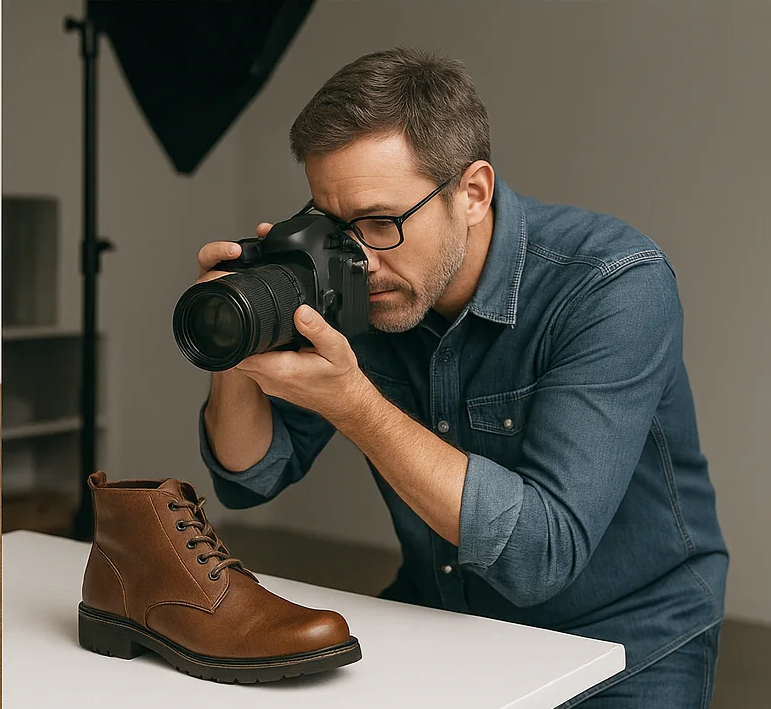
How to Take Better Photos of Your Items
Better photos can help people understand your item before making an offer. Learn how to use natural light, choose a clean background, show multiple angles, photograph details and defects, and take clearer listing photos using the phone you already have.

How to Write a Good Listing That Gets Better Offers
A good listing makes it easier for people to understand what you are offering and decide whether it is right for them. Learn how to write clear titles, useful descriptions, accurate condition details, effective exchange preferences, and better listing photos.

What Items Are Good for Swapping?
Not every item is equally easy to exchange. Discover which types of items tend to work well for swapping, from books and clothing to furniture, electronics, hobby gear, kitchen items, and more, plus tips for choosing items that other people are likely to find useful.