
How to Write a Good Listing That Gets Better Offers
A good listing makes it easier for people to understand what you are offering and decide whether it is right for them. Learn how to write clear titles, useful descriptions, accurate condition details, effective exchange preferences, and better listing photos.

Why a good listing matters
When you post an item on Exchangify, your listing is the first thing other members see. Before anyone can decide whether they are interested in your item, they need to understand what it is, what condition it is in, where it is located, and what you are looking for in return.
A listing does not need to sound like an advertisement. In fact, clear and honest information is usually more useful than exaggerated descriptions. The goal is simple: give another person enough information to understand your item and decide whether an exchange could work for both of you.
A well-written listing can also save you time. When important details are already included, you are less likely to answer the same basic questions repeatedly. At the same time, potential exchange partners can make more informed offers because they know what they are considering before they contact you.
Whether you are listing a book, a small appliance, clothing, furniture, electronics, sports equipment, or something completely different, the same basic principles apply.
Start with a clear title
The title is one of the first pieces of information people see, so it should explain what the item actually is.
A good title usually includes the item's main type and, when useful, a specific identifying detail such as the brand, model, size, color, or version.
For example:
- Better: IKEA KALLAX 2x2 Shelf – White
- Better: Men's Nike Running Shoes – Size 43
- Better: Nintendo Switch Lite – Turquoise
- Better: Hardcover Cookbook – Italian Recipes
Compare those with titles such as:
- Great item!
- Must see
- Something useful
- For exchange
The second group does not tell the reader enough. Someone browsing many listings should not have to open an item simply to discover what it is.
Keep the important information near the beginning
Try to put the most useful identifying information in the title itself. You do not need to include every detail there. The description is where you can explain the item more fully.
A simple formula is:
Item type + brand/model + important identifying detail
For example, instead of Kitchen item, you could write Stainless Steel French Press – 1 Liter.
Instead of Shoes, you could write Adidas Sneakers – Size 42 – Black.
The more specific title makes the listing easier to understand immediately.
Write a description that answers real questions
Your description should help someone understand what they would actually receive in the exchange.
Think about the questions you would ask if you were considering the item yourself:
- What exactly is included?
- How long have you had it?
- What condition is it in?
- Does it work properly?
- Are there scratches, stains, dents, or other signs of use?
- Are any accessories or original parts missing?
- Are there important measurements or specifications?
- Is there anything unusual that another person should know?
You do not need to write a huge paragraph containing every possible detail. Organize the information so it is easy to scan.
A useful structure for a description
You can use the following structure for many different types of listings:
- What the item is.
- Its condition.
- Important details or specifications.
- What is included.
- Any defects or limitations.
- What kind of exchange you are interested in.
For example:
White IKEA KALLAX shelf in good used condition. It has been used in a smoke-free home and is structurally sound. There are a few small marks on one side from normal use, which can be seen in the photos. The shelf is approximately 77 × 77 cm. No additional accessories are included. I am mainly interested in exchanging it for a small desk or another useful piece of home furniture.
This description gives the reader a much better idea of what to expect than something like "Good shelf, used but still nice. Looking for offers."
Be honest about the condition
One of the most important parts of a listing is the condition of the item.
People can usually accept normal signs of use when they know about them in advance. What tends to create problems is discovering an important defect only after an exchange has been arranged.
Instead of simply saying that an item is in "good condition," explain what that means.
Describe both the good and the imperfect parts
For example:
- Good: Works normally and has only minor cosmetic wear.
- Better: Works normally, but there are several small scratches on the top surface.
Or:
- Good: Used but in good condition.
- Better: Worn twice and washed after each use. No visible tears, but there is slight fading on the printed design.
Specific information helps people make better decisions.
Do not hide small defects
A scratch, stain, missing button, dent, or damaged corner may not make the item unusable. Mention it anyway.
Being transparent can make your listing more trustworthy and can prevent misunderstandings later. If a defect is visible, it is also a good idea to photograph it clearly.
Explain what is included
People sometimes assume that an item includes accessories that are not actually part of the exchange.
For electronics, for example, mention whether the listing includes:
- the original charger,
- batteries,
- remote controls,
- cables,
- manuals,
- cases,
- stands, or
- other important accessories.
For furniture, you might need to clarify whether shelves, drawers, cushions, covers, or mounting hardware are included.
For clothing, mention whether the item is sold or exchanged individually or as part of a set.
It can be useful to add a sentence such as:
Included: Main item, original charger, and protective case.
Or:
Not included: Original packaging and wall-mounting hardware.
Use useful measurements
Measurements can make a big difference, especially for clothing, furniture, storage, sports equipment, and other physical items.
For example, instead of:
"Small table."
consider:
"Small wooden table, approximately 80 cm wide, 50 cm deep, and 45 cm high."
For clothing, measurements can be particularly helpful because labeled sizes can vary between brands.
You might include:
- chest width,
- waist measurement,
- overall length,
- inseam, or
- shoe insole length.
The exact measurements you provide should depend on the item and what another person would reasonably need before deciding whether an exchange is suitable.
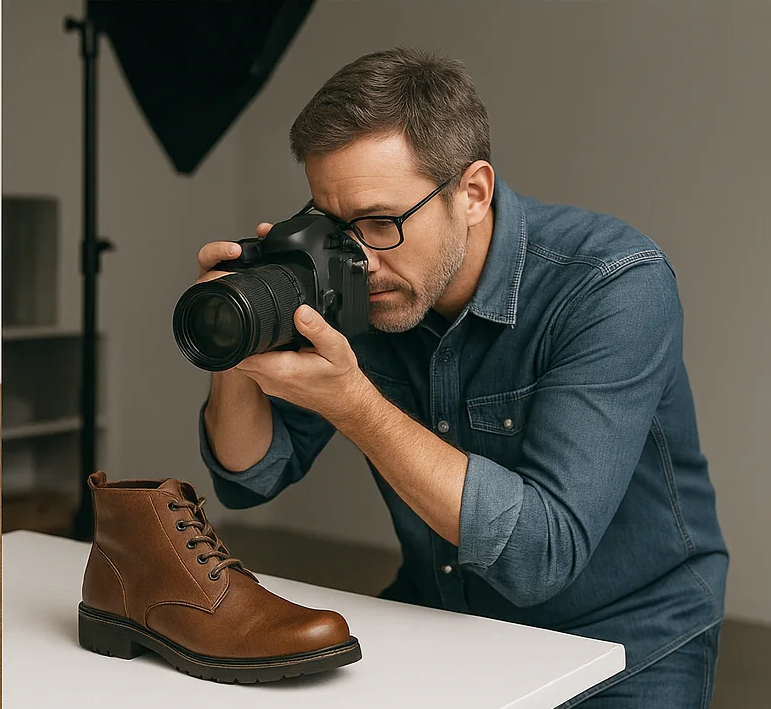
Take better photos
Even a well-written description can be difficult to evaluate without good photos. Images help people understand the item's appearance, scale, condition, and details.
Use enough light
Take photos in good lighting so that colors and details are visible. Natural light can work particularly well, but you do not need professional equipment.
A clean table, floor, wall, or other simple background is often enough. Try to avoid very dark photos where scratches, labels, or other details are difficult to see.
Show more than one angle
One photograph rarely tells the whole story.
Depending on the item, useful views can include:
- a clear overall photo,
- a front or main view,
- a side or rear view when relevant,
- a close-up of important details, and
- a photo of any defect or visible wear.
Photograph the actual item
Whenever possible, use photos of the item you are actually offering rather than relying only on manufacturer images or generic pictures from the internet.
A real photo helps potential exchange partners understand the current condition of the item.
Show defects clearly
A close-up photograph of a scratch or damaged area might feel like a negative thing to include, but it can actually make the listing more informative.
Being clear about imperfections gives people a more accurate idea of what they are considering and reduces surprises later.
Choose the right condition honestly
Exchangify listings should give other members a realistic understanding of an item's condition.
Before selecting a condition, think about the difference between appearance and functionality.
An item can have cosmetic wear and still work perfectly. Another item may look good but have a functional problem.
For example:
- Bad condition: Significant damage, major wear, missing important parts, or functionality problems.
- Good condition: Normal signs of use with the item still generally usable and functional.
- Excellent condition: Very little visible wear and generally close to its original condition.
These are practical descriptions rather than strict rules. The important thing is that your selected condition matches the explanation in your listing.
Tell people what kind of exchange you want
A listing can be clear about the item but still leave potential exchange partners unsure about what you are looking for.
You do not have to create a strict shopping list. Even a general idea can help.
For example:
- Looking for books, board games, or hobby items.
- Interested in exchanging for a small desk or storage furniture.
- Open to kitchen equipment or useful household items.
- Mostly interested in sports equipment.
- Open to reasonable offers.
These details can help people decide whether it is worth making an offer.
Be open without being vague
There is a useful difference between being flexible and providing no information.
Too vague: "Send anything."
More useful: "I am open to different offers, especially books, board games, or home accessories."
You may still receive offers that do not match your preferences exactly, but giving people some direction usually improves the quality of the conversation.
Make the location clear
Location matters for physical exchanges. An item may be perfect for someone, but too far away to make a practical exchange.
Make sure your listing's location is accurate and up to date.
You generally do not need to include your exact home address in the listing. A suitable general location can be enough to help people decide whether the exchange is practical.
More detailed meeting arrangements can be discussed later with the other person.
Write for someone who knows nothing about the item
It is easy to forget important information because you already know your item well.
Imagine that another member is seeing the item for the first time. What would they need to know?
For example, if you are listing a camera, mentioning only the brand may not be enough. The model, lens, approximate age, included accessories, condition, and any known issues could be much more useful.
If you are listing clothing, include the type of garment, labeled size, approximate fit when useful, condition, material if known, and any relevant wear.
If you are listing furniture, measurements, material, color, condition, and whether it can be disassembled can all be helpful.
Avoid unnecessary marketing language
You do not need to describe everything as "amazing," "perfect," "incredible," or "must have."
Specific facts are generally more useful than enthusiastic adjectives.
Compare:
Less useful: "This amazing chair is absolutely perfect and you will love it!"
More useful: "Black office chair with adjustable height and armrests. Used for approximately one year. The chair works normally, with some minor wear on the armrests."
The second version gives another member information they can actually use.
Keep the description easy to scan
A very long block of text can be difficult to read, even when it contains useful information.
Use short paragraphs and simple structure.
You can also use labels such as:
Condition: Good, with minor cosmetic wear.
Size: Approximately 80 × 50 × 45 cm.
Included: Main item and original accessories.
Exchange preference: Open to home office or storage items.
This makes it easier for someone to find the information they need quickly.
Do not leave out important problems
If something is broken, incomplete, repaired, modified, stained, or otherwise significantly different from its original condition, mention it.
This is particularly important for electronics and mechanical items.
For example:
Instead of: "Older laptop in good condition."
Better: "Older laptop that still starts and works for basic tasks. The battery no longer holds a full charge, and there is visible wear around the keyboard. Charger included."
The second description gives the other person a realistic basis for deciding whether the item is suitable for them.
Think about the exchange from both sides
A good listing is not only about what you want to receive. It is also about making it easy for the other person to understand what they are getting.
Before publishing, read your listing as if you were the person considering an offer.
Ask yourself:
- Do I know exactly what the item is?
- Do I understand its condition?
- Can I see the item clearly in the photos?
- Do I know what is included?
- Do I know about any important defects?
- Do I know what type of exchange the owner is interested in?
- Do I have enough information to decide whether to make an offer?
If the answer to these questions is yes, your listing is probably doing its job well.
A practical example
Here is an example of a listing that provides useful information without becoming unnecessarily complicated.
Title: Logitech Wireless Keyboard and Mouse – Black
Description: Wireless keyboard and mouse set in black. Both devices are working normally and were used regularly for about one year. There are minor signs of use, particularly around the space bar and mouse buttons. No major scratches or damage.
The set includes the keyboard, mouse, and USB receiver. Original packaging is not included.
I am mainly interested in exchanging for books, board games, or other useful home-office items, but I am open to reasonable offers.
Notice that the description does several things at once: it identifies the item, explains the condition, lists what is included, mentions visible wear, and gives an idea of what the owner would like in return.
Common listing mistakes to avoid
1. A title that says almost nothing
Titles such as "Stuff," "Item for exchange," or "Look here" do not help people understand what you are offering.
2. A description with no condition details
Saying "good condition" without explaining visible wear or known problems can create uncertainty.
3. One poor-quality photo
A blurry, dark, distant, or cluttered image can make an otherwise useful item difficult to evaluate.
4. Missing measurements
For items where size matters, missing dimensions can make it difficult for someone to know whether the item will work for them.
5. Missing accessories
If the original charger, cable, stand, remote, cover, or other important accessory is not included, say so.
6. Vague exchange preferences
You do not need to demand a specific replacement item, but giving people some general direction can make better offers more likely.
7. Overpromising
Calling a heavily used item "like new" can create expectations that the item cannot meet. Describe the actual condition instead.
8. Forgetting to update the listing
If the item's condition changes, an important accessory is added or removed, or your exchange preferences change, update your listing so that it remains accurate.
Use a simple checklist before publishing
Before you publish an Exchangify listing, take one final look through it.
- Title: Does the title clearly identify the item?
- Description: Have I included the important details?
- Condition: Is the condition accurate and honestly explained?
- Photos: Can another person clearly see the actual item?
- Defects: Have I mentioned important damage or wear?
- Included items: Have I explained what comes with the exchange?
- Measurements: Have I added dimensions or sizes where useful?
- Exchange preference: Have I explained what I might be interested in receiving?
- Location: Is the general location accurate?
- Accuracy: Does everything in the listing still match the item I am offering?
Good listings help create better exchanges
A strong listing is not about writing the longest possible description. It is about providing the right information clearly.
A useful title helps people understand the item quickly. A detailed description answers common questions. Accurate condition information builds realistic expectations. Good photos show what words cannot. Measurements and included accessories reduce uncertainty. Clear exchange preferences help other members decide whether to make an offer.
Together, these small improvements can make the entire exchange process easier for everyone involved.
When people know what they are offering and what they can expect in return, conversations can start from a much better place.
Final thought
Your listing represents the item before the exchange ever takes place. Take a few extra minutes to make it accurate, useful, and easy to understand.
You do not need professional photography, complicated writing, or a perfect sales pitch. A clear title, honest description, useful photos, and realistic expectations are usually enough to create a much better listing.
Before you publish, read your listing one more time and ask yourself: "Would I have enough information to make an offer?"
If the answer is yes, you are ready to publish.
You may also like
How to Take Better Photos of Your Items
Better photos can help people understand your item before making an offer. Learn how to use natural light, choose a clean background, show multiple angles, photograph details and defects, and take clearer listing photos using the phone you already have.

What Items Are Good for Swapping?
Not every item is equally easy to exchange. Discover which types of items tend to work well for swapping, from books and clothing to furniture, electronics, hobby gear, kitchen items, and more, plus tips for choosing items that other people are likely to find useful.

Tips for Negotiating an Exchange
Negotiating an exchange does not have to be difficult. Learn how to make thoughtful offers, understand the other person's preferences, make counteroffers, discuss differences in value, handle multiple offers, and reach an agreement that works for both sides.