
Sustainable Alternatives to Buying New
There are many ways to get the things you need without always buying them new. Discover practical alternatives such as swapping, donating, buying used, repairing, borrowing, renting, and reusing what you already own.

Do you always need to buy something new?
When we need something, the most obvious solution is often to buy it new. A new item is easy to find, available in many stores, and usually comes with the feeling that we are getting something fresh and unused.
But buying new is not the only way to get what you need.
There are many practical alternatives that can help you save money, make better use of existing products, reduce unnecessary consumption, and keep useful items in circulation for longer.
Sometimes the best solution is to swap something you already own. Sometimes it is to buy a second-hand item, repair something you already have, borrow an item from a friend, or rent something that you only need temporarily.
These alternatives do not require you to stop buying new products completely. Instead, they give you more choices when deciding what makes sense for a particular situation.
This guide explores some of the most practical alternatives to buying new and how you can incorporate them into everyday life.
Why consider alternatives to buying new?
Buying a new product is not automatically a bad decision. Sometimes a new item is exactly what you need.
However, there are situations where buying something new may not be necessary.
You might already own something similar. Someone else might have an unused item that would work just as well. A broken item might be repairable. You might only need a product for a short period of time.
In these situations, looking for an alternative can make practical sense.
Choosing alternatives can help you:
- make better use of items that already exist,
- reduce unnecessary purchases,
- save money,
- declutter by passing unused items to someone else,
- extend the useful life of products, and
- find solutions for temporary or occasional needs.
The best choice depends on the item, your circumstances, your budget, and how long you expect to use the product.
1. Swap instead of buying
Swapping is one of the simplest alternatives to buying something new.
Instead of spending money on an item, you can offer something you already own in exchange for something you would actually like to use.
For example, you might exchange:
- books you have already read for books you want to read,
- clothing that no longer fits for clothing in your size,
- unused furniture for something that better fits your home,
- hobby equipment for another hobby item, or
- household items you no longer need for something useful to you.
The great thing about swapping is that both sides can benefit from items they already have.
Why swapping can be practical
Many products spend long periods sitting unused.
A bookshelf may be taking up space in one home while another person is looking for exactly that type of shelf.
A board game may be sitting untouched on one person's shelf while another person is looking for something new to play.
Swapping creates a way for those existing items to move from someone who no longer needs them to someone who does.
2. Buy second-hand
Sometimes you genuinely need to acquire something, but it does not have to be brand new.
Second-hand shopping can be a practical alternative for many categories of products.
Depending on the item, you may be able to find:
- used furniture,
- books,
- clothing,
- electronics,
- sporting goods,
- kitchen equipment,
- tools,
- musical equipment, and
- hobby items.
Some used items have seen very little use. Others may show normal signs of wear but remain perfectly functional.
The important thing is to evaluate the condition carefully and understand what you are buying.
Second-hand does not necessarily mean low quality
An item being used simply means that someone owned it before you.
It does not automatically mean that it is damaged, outdated, or unsuitable.
A solid wooden table, quality jacket, book, tool, or piece of equipment may continue to be useful for many years.
When considering a used item, focus on its current condition and usefulness rather than simply whether it has been owned before.
3. Repair what you already own
One of the most overlooked alternatives to buying new is repairing the item you already have.
A broken zipper does not necessarily mean you need a new jacket.
A loose chair leg does not necessarily mean you need a new chair.
A damaged cable, worn component, or small mechanical problem may sometimes be repairable.
Repairing can extend the useful life of a product and may cost significantly less than replacing it.
Start by understanding the problem
Before replacing an item, ask:
- What exactly is broken?
- Is the item otherwise usable?
- Can the damaged component be replaced?
- Can the item be repaired by a professional?
- Would the repair cost make sense compared with replacement?
Not every repair is worthwhile, but it can be useful to consider the option before automatically buying something new.
4. Learn simple repair skills
You do not need to become an expert technician to repair everyday objects.
Simple skills can help you keep more things in use.
For example, you might learn how to:
- replace a button,
- repair a small clothing tear,
- tighten furniture hardware,
- replace simple components,
- restore basic household items, or
- perform routine maintenance.
For anything involving significant electrical, mechanical, structural, or safety risks, use appropriate professional help rather than attempting a repair you are not qualified to perform.
5. Borrow items you only need occasionally
There are many things people use only a few times per year.
Buying these items can create unnecessary cost and storage needs.
Borrowing may be a better option.
For example, you might borrow:
- a specialized tool,
- a camping item,
- a book,
- a board game,
- a kitchen appliance,
- a ladder, or
- equipment needed for a one-time project.
Friends, family members, neighbors, community groups, and other local networks can sometimes provide useful borrowing opportunities.
Borrowing works best when you treat the item responsibly
When borrowing something, return it in the same condition you received it and communicate clearly about when you will return it.
If you damage the item, be honest about what happened and discuss the appropriate solution with the owner.
Good borrowing relationships depend on trust.
6. Rent instead of buying
Some items are expensive, bulky, or only useful for a short period.
In these situations, renting may make more sense than owning.
Depending on where you live and what services are available, people can sometimes rent:
- tools,
- vehicles,
- specialized equipment,
- formal clothing,
- party equipment,
- outdoor equipment, and
- other occasional-use products.
Renting can be particularly useful when you expect to use something only once or a few times.
7. Share expensive or rarely used items
Some products are designed for individual ownership even though they are rarely used.
Instead of everyone buying their own version, a group of people may sometimes share access.
For example, friends or neighbors might coordinate access to:
- gardening equipment,
- large tools,
- camping equipment,
- specialized cleaning equipment, or
- other occasional-use items.
Sharing works particularly well when people live close to each other and can coordinate usage easily.
Create simple rules
If several people share an item, agree on basic expectations.
Discuss who keeps the item, how reservations work, how maintenance is handled, and what happens if something is damaged.
Clear expectations make shared ownership much easier.
8. Reuse something you already have
Before buying something for a particular purpose, look around and ask whether another object you already own could do the job.
For example:
- a storage container might become an organizer,
- an old jar might be useful for storing small items,
- a spare shelf might work in another room,
- unused fabric might become part of a craft project, or
- an old piece of furniture might be repurposed.
Reuse is often about looking at an object differently.
9. Repurpose furniture and household items
Something no longer suitable for its original purpose may still be useful in another role.
A small table might become a plant stand.
A bookshelf might become storage in a different room.
An old container might become an organizer.
A sturdy wooden box might become storage or decoration.
Not every item can or should be repurposed, but it is worth considering before throwing something away.
10. Buy products designed to last
When buying new really is the best option, consider how long you expect the product to remain useful.
A lower purchase price does not always tell you everything about the overall usefulness of an item.
When comparing products, think about:
- expected lifespan,
- repairability,
- availability of replacement parts,
- quality of construction,
- warranty or service options, and
- whether the item can remain useful as your needs change.
A product that can be maintained and repaired may remain useful longer than one that must be replaced after a minor failure.
11. Choose repairable products
Repairability can be an important consideration when purchasing something new.
When practical, look for products with replaceable components, accessible maintenance information, or available repair services.
Examples might include products where batteries, filters, cables, fasteners, or other consumable components can be replaced independently.
The exact repair options depend heavily on the product category.
Ask questions before purchasing
When making a significant purchase, it can be useful to ask:
- Can common parts be replaced?
- Are replacement components available?
- Can the product be serviced?
- Is repair information available?
- What happens if a common component fails?
These questions can help you think beyond the initial purchase.
12. Choose quality over unnecessary quantity
Sustainability is not only about the individual product. It can also be about how many products you buy.
Sometimes one useful, well-chosen item is better than accumulating several products that perform almost the same function.
Before making a purchase, ask:
Do I actually need another one?
You may discover that you already have something that solves the same problem.
13. Use what you already own more effectively
Sometimes the most sustainable alternative to buying something is simply using the things you already have.
You may already own:
- clothing that works for the occasion,
- tools that can handle the job,
- books you have not yet read,
- kitchen equipment that is rarely used, or
- storage items that can be reorganized.
A little organization can reveal useful resources you forgot you already had.
14. Declutter before shopping
Decluttering and sustainable consumption can work together.
Before buying a new organizer, for example, consider whether you need better organization rather than another storage product.
Before buying more clothes, look through your current wardrobe.
Before buying another kitchen gadget, check whether an existing appliance can perform the same function.
This simple pause can prevent unnecessary purchases.
15. Swap children's items as they are outgrown
Children often outgrow clothing, toys, books, and other belongings quickly.
That creates natural opportunities for swapping.
One family may have items that are no longer needed while another family is looking for the same type of product.
Books, clothing, toys, games, and other ordinary children's items can sometimes move through several households while remaining useful.
As always, condition and safety should be considered carefully before passing items along.
16. Swap hobby equipment when your interests change
Hobbies change over time.
You might become interested in photography, painting, cycling, gardening, music, crafts, cooking, or another activity and later discover that some of the equipment is no longer being used.
Instead of letting it sit in storage forever, consider exchanging it for something that matches your current interests.
This can help you upgrade or change hobbies without automatically buying everything new.
17. Pass on items you no longer need
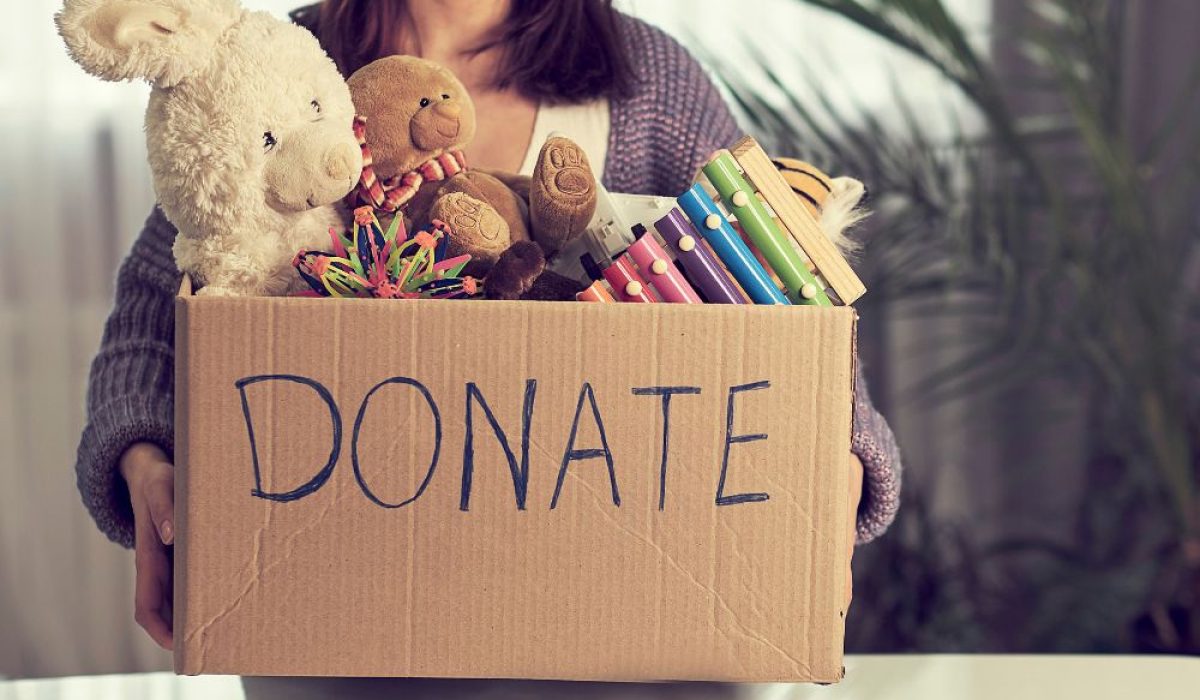
Donation is another useful alternative to buying something new.
Sometimes you do not need to receive anything in return. You simply want another person to benefit from an item that you no longer use.
Donating can be a practical option for:
- books,
- clothing,
- household items,
- furniture,
- hobby equipment, and
- other useful belongings.
When donating, make sure the item is genuinely usable and describe its condition honestly.
18. Buy used and donate what you replace
Sustainable choices do not have to happen one at a time.
For example, you might replace a piece of furniture with a second-hand item and then donate or swap the furniture you no longer need.
This keeps both transactions focused on reuse rather than automatically sending the old item to waste.
The important thing is to ensure that each item remains useful and is passed on responsibly.
19. Choose refurbished products where appropriate
For some categories, refurbished products can provide another alternative to buying brand-new.
Refurbished products may have been returned, repaired, inspected, or restored before being offered again.
When considering a refurbished product, look at the seller's description, warranty, return policy, condition, and what refurbishment actually involved.
Not every refurbished product is the same, so evaluate the specific item rather than assuming a particular quality level.
20. Buy replacement parts instead of replacing the whole item
Sometimes the part that failed is much smaller than the product itself.
A broken handle, missing component, worn cable, or damaged accessory may be replaceable.
Before replacing an entire product, ask whether the specific part can be repaired or replaced.
This can be especially useful for furniture, appliances, tools, bicycles, clothing, and other products with replaceable components.
21. Maintain your belongings
Regular maintenance can help products remain useful for longer.
Depending on the item, maintenance might include:
- cleaning,
- lubricating moving parts,
- replacing filters,
- tightening loose hardware,
- storing items correctly, or
- following recommended care instructions.
Maintenance is not exciting, but small steps can help prevent avoidable deterioration.
Follow appropriate care instructions
Different materials and products require different treatment.
Follow the manufacturer's instructions when they are available, particularly for appliances, electronics, clothing, tools, and other products where incorrect maintenance could cause damage.
22. Take care of clothing so it lasts longer
Clothing is an everyday example of how care can affect useful life.
Depending on the garment, useful practices can include:
- following washing instructions,
- using suitable detergents,
- repairing small damage early,
- storing clothing appropriately, and
- avoiding unnecessary washing when the garment does not require it.
When you eventually stop using a garment, keeping it in good condition can also make it easier to donate or swap.
23. Buy less when you can
Sustainable consumption does not always require finding a different product.
Sometimes the most practical alternative is not purchasing anything at all.
Before buying, ask yourself:
- Do I need this?
- Do I already have something similar?
- Will I use it regularly?
- Can I borrow one instead?
- Can I rent one?
- Could I buy it second-hand?
- Could I repair or adapt something I already own?
- Could I swap for it?
A short pause can sometimes reveal a simpler solution.
24. Avoid buying products simply because they are on sale
A discount can make a product seem like an opportunity even when you were not planning to buy it.
Before purchasing a discounted item, ask whether you would still want it at its normal price.
If the answer is no, the discount may not be solving a real need.
Buying something that you rarely use is still consumption even when the purchase price is low.
25. Build a personal "reuse first" habit
You do not need to completely change your lifestyle overnight.
A small habit can be enough to start:
Before buying something new, check whether there is already an existing solution.
That solution could be something you own, something you can repair, something you can borrow, something available second-hand, or something you can swap for.
Over time, this becomes a natural part of decision-making.
26. Start with categories where reuse is easy
You do not have to rethink every purchase immediately.
Start with categories where alternatives are straightforward.
For example:
- books,
- clothing,
- furniture,
- board games,
- hobby items,
- household storage, and
- small kitchen items.
These categories often have long useful lives and are relatively easy to describe, inspect, transport, donate, or swap.
27. Consider the full life of the product
When deciding whether to buy something, think beyond the moment of purchase.
Ask:
- How long will I use it?
- What happens if it breaks?
- Can someone else use it after me?
- Can I repair it?
- Can I donate or swap it later?
An item that has several potential users throughout its life can remain useful for much longer than an item purchased for a very short period and quickly discarded.
28. Choose items that can be passed on
When making a new purchase, consider whether the item can eventually be useful to someone else.
Products with durable construction, ordinary replacement parts, and broad practical uses may be easier to pass on later.
This does not mean you need to predict the future perfectly. Simply thinking about an item's next stage can encourage more thoughtful purchasing decisions.
29. Make swapping part of your normal routine
Swapping does not have to be something you do only when you are decluttering.
It can become part of the way you acquire things.
When you need something, check whether another member might already have the item you are looking for.
At the same time, when you notice something in your home that you no longer use, consider whether someone else might want it.
This creates a cycle:
Need something → look for an existing item → swap or buy used → use it → pass it on when finished.
The item can continue moving between people instead of being treated as disposable.
30. Think about value beyond money
The financial price of an item is only one way to think about value.
An item may have:
- practical value,
- educational value,
- creative value,
- sentimental value,
- collectible value, or
- value because it solves a particular problem.
This is especially important when considering second-hand goods and swaps.
A product that no longer has much use for one person can still be highly useful to another.
31. Avoid perfection when considering used items
Some people reject second-hand products because they expect them to look exactly like new products.
That can eliminate many perfectly useful options.
Normal signs of use do not necessarily mean that an item is unsuitable.
Instead of asking whether an item looks new, ask whether its current condition is appropriate for how you intend to use it.
A book with a slightly worn cover can still be a great book.
A table with a few scratches can still be a useful table.
A jacket with normal signs of wear can still provide years of use.
32. Learn to distinguish "old" from "unusable"
Age and condition are not the same thing.
Some older items remain functional and useful for many years.
Other items can become unusable much sooner.
When evaluating a second-hand or donated item, focus on its current condition and suitability rather than rejecting it simply because it is older.
33. Give useful items a second life
One of the simplest ways to avoid unnecessary consumption is to keep useful objects in use.
An item does not have to remain with its first owner forever.
It can move from one household to another through:
- swapping,
- donation,
- second-hand sales,
- borrowing,
- sharing, or
- community reuse programs.
Each of these options can provide another opportunity for the item to be useful.
34. Build a "before buying" checklist
A simple checklist can make sustainable alternatives easier to remember.
Before buying something new, ask:
- Do I already own something that can do this job?
- Can I repair what I already have?
- Can I borrow the item?
- Can I rent it?
- Can I buy it second-hand?
- Can I find it through a local reuse community?
- Could I swap something I own for it?
- Do I actually need it?
You may still decide to buy new after considering these options.
The purpose of the checklist is not to prevent every new purchase. It is simply to make sure that you considered the alternatives.
35. Sustainable choices do not have to be perfect
It is easy to think that sustainable consumption requires every decision to be perfect.
Real life is more complicated.
Sometimes you need something immediately. Sometimes buying new is the most practical choice. Sometimes a second-hand option is unavailable or unsuitable.
The goal is not perfection.
The goal is to consider whether another option makes sense when one is available.
36. Small decisions can add up
One swap may seem small.
One repaired chair may seem insignificant.
One borrowed tool may not seem important.
One donated box of books may feel like a very small contribution.
But these decisions can become meaningful when they become regular habits.
Choosing to reuse an item instead of replacing it, or passing an unwanted item to someone who can use it, keeps products circulating rather than treating them as disposable.
A practical example
Imagine that you need a desk for your home.
The first option that comes to mind is to buy a new desk from a furniture store.
Before doing that, you could consider several alternatives.
- Check whether you already have a table that could work.
- Ask friends or family whether they have a spare desk.
- Look for a second-hand desk.
- Check whether someone nearby is offering a desk for donation.
- Look for a desk available for swapping.
- Consider repairing or modifying an existing piece of furniture.
- If you only need the desk temporarily, consider whether borrowing or renting is practical.
If none of these options work, buying a new desk may still be the right solution.
The important part is that you considered the alternatives rather than automatically assuming that new was the only option.
Another example: replacing a kitchen appliance
Suppose a small kitchen appliance stops working.
Before purchasing a replacement, consider:
- Can the problem be diagnosed?
- Can a replaceable part fix it?
- Is professional repair practical?
- Can you borrow the appliance while deciding what to do?
- Is there a reliable second-hand option?
- Is there a refurbished option?
- Do you actually need the same appliance again?
You may discover that a repair is enough, or that another solution works better for your current needs.
How Exchangify fits into the picture
Exchangify is built around one simple idea: useful items do not have to stay with the same owner forever.
When someone no longer needs an item, another person may be looking for exactly that type of object.
Instead of automatically buying something new, an Exchangify member can look at available items and consider whether an exchange or donation could solve the problem.
This can be especially useful for everyday products such as books, furniture, clothing, household items, hobby equipment, and other goods that remain useful after their first owner is finished with them.
The goal is not to eliminate buying new products. It is to make reuse another normal part of how people find things they need.
How to make sustainable alternatives easier
The easier an alternative is to use, the more likely it is to become part of your routine.
A few simple habits can help:
- Keep track of things you already own.
- Take care of products while you use them.
- Repair small problems when practical.
- Keep unwanted but usable items separate from actual waste.
- Consider donating or swapping before throwing things away.
- Check second-hand options before large purchases.
- Borrow or rent products that you only need occasionally.
These habits make reuse a normal part of decision-making instead of something you have to remember occasionally.
What sustainable consumption really means
Sustainable consumption is not about never buying anything.
People need clothing, furniture, electronics, tools, food, and many other products.
The more useful question is how thoughtfully those products are acquired, used, maintained, and eventually passed on.
When an item can be repaired instead of replaced, reused instead of discarded, swapped instead of bought, or donated instead of stored indefinitely, there is an opportunity to keep that item useful for longer.
That mindset can change the way we look at everyday objects.
A simple hierarchy for your next purchase
When you need something, consider going through these steps:
- Use what you already have. Check whether an existing item can solve the problem.
- Repair. If something is broken, see whether it can reasonably be fixed.
- Borrow. If you only need the item occasionally, ask whether you can borrow it.
- Rent. For specialized or temporary needs, renting may make sense.
- Swap. Look for someone who has what you need and may want something you own.
- Buy used. Consider second-hand or refurbished options.
- Buy new. When the alternatives do not meet your needs, buy a suitable new product thoughtfully.
This is not a strict rulebook. Different situations require different solutions.
It is simply a useful way to remember that buying new is only one option among many.
Final thoughts
There are many ways to get the things you need without always buying them new.
You can swap with another person. You can buy second-hand. You can repair something you already own. You can borrow an item from a friend or neighbor. You can rent something for occasional use. You can reuse or repurpose an object in a different way. And you can donate useful items when you no longer need them.
These approaches can save money, reduce unnecessary purchases, and keep useful products in circulation for longer.
None of these choices needs to be perfect.
The important habit is simply to pause before buying and ask whether there is already another solution.
Do I need to buy this new, or could something that already exists work just as well?
Sometimes the answer will still be "buy new." That is perfectly reasonable.
But sometimes the answer will be a repair, a second-hand item, a borrowed product, a rental, a donation, a reuse project, or a swap.
And when that happens, you have found another way to get what you need while giving something that already exists another opportunity to be useful.
Before buying new, look at what is already out there. You may already have the solution—or someone else might.
You may also like

5 Items People Often Have Sitting Unused at Home
Many useful things can end up sitting in cupboards, storage rooms, wardrobes, or spare corners of the house without being used. Discover five types of items you may already have at home that could be swapped, donated, or passed on to someone who needs them.
How to Donate Unwanted Items
Learn how to donate unwanted items in a way that is useful to other people and responsible for the environment. From choosing what to donate and checking condition to cleaning, photographing, describing, and arranging handover, this guide explains how to give your unused belongings a second life.