
How to Donate Unwanted Items
Learn how to donate unwanted items in a way that is useful to other people and responsible for the environment. From choosing what to donate and checking condition to cleaning, photographing, describing, and arranging handover, this guide explains how to give your unused belongings a second life.
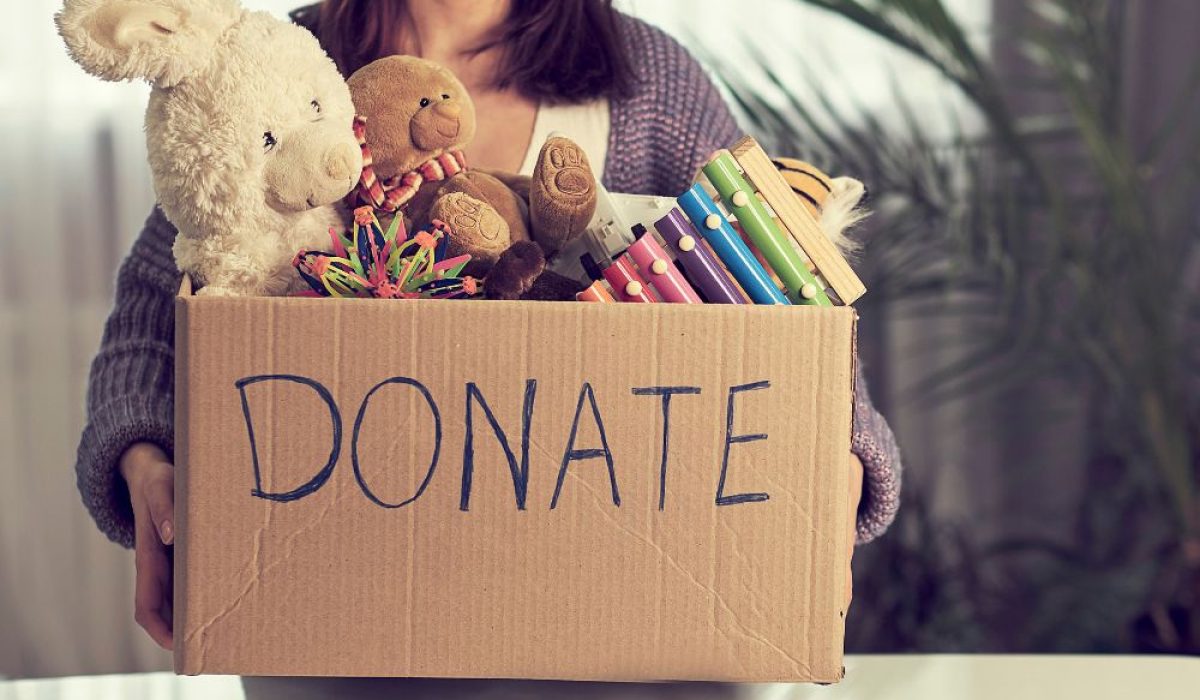
Giving unwanted items a second life
Most homes contain things that are no longer being used. A book has already been read, a piece of clothing no longer fits, a kitchen appliance has been replaced, or a piece of furniture no longer works in the current space.
When an item is still useful, throwing it away is not the only option.
Donating unwanted items can give them a second life with someone who needs or appreciates them. It can also be a practical way to declutter your home while keeping usable products in circulation for longer.
Donation does not have to be complicated. The most important steps are to choose items responsibly, describe them honestly, prepare them properly, and make the handover clear for everyone involved.
This guide explains how to approach donations in a simple and practical way.
What makes an item suitable for donation?
Before donating something, ask yourself whether another person can realistically use it.
A good donation candidate is often:
- still usable,
- reasonably clean,
- complete enough to serve its intended purpose,
- safe to handle and use, and
- something that another person could reasonably want.
The item does not need to be new.
Used books, furniture, clothing, kitchen equipment, toys, hobby supplies, and other everyday belongings can still be useful when they are in appropriate condition.
The important question is not whether you would personally buy the item today. The question is whether another person can make good use of it.
1. Start by identifying what you no longer use
One of the easiest ways to begin donating is to look around your home and identify things that have not been used for a long time.
You might find:
- books you have already finished,
- clothes that no longer fit,
- children's items that have been outgrown,
- kitchen equipment you rarely use,
- furniture that no longer fits your space,
- unused office supplies,
- hobby materials from old projects, or
- household items that have been replaced.
Do not assume that an unused item has no value simply because it has no value to you anymore.
Your needs can change while the usefulness of the object remains.
2. Ask whether someone else can actually use it
Before creating a donation listing, think about the item's practical condition.
Ask:
- Does it still perform its intended purpose?
- Is it complete enough to use?
- Would another person reasonably want it in its current condition?
- Can I explain its condition honestly?
- Is it safe and appropriate to give away?
If the answer to these questions is yes, the item may be a good donation candidate.
If the item is broken, incomplete, heavily damaged, or unsafe, donation may not be the right option. In that situation, consider whether it is suitable for repair, recycling, or another responsible form of disposal instead.
3. Do not donate things you would not reasonably give to another person
Donation is not simply a way to make unwanted waste disappear.
One useful rule is:
Donate usable items, not problems.
If an item is dirty, damaged, unsafe, or missing essential components, think carefully before donating it.
An organization or individual receiving the item may have limited time and resources. Passing along something that cannot realistically be used may simply move the disposal problem to someone else.
4. Clean the item before donating
Whenever practical, clean the item before offering it.
You do not need to make a used object look new. The goal is simply to present it in a clean and reasonable condition.
Depending on the item, this might mean:
- dusting a piece of furniture,
- washing clothing,
- cleaning kitchen equipment,
- wiping down electronics,
- removing obvious dirt, or
- cleaning containers and storage items.
A clean item is generally easier for another person to evaluate and use.
Do not use cleaning to hide damage
Cleaning and concealing defects are two different things.
If an item has stains, scratches, cracks, faded areas, or other visible wear, the goal should be to make the item clean while still describing and showing its actual condition.
Honesty is just as important for donations as it is for exchanges.
5. Check that the item is complete
Many items are much more useful when their essential parts are included.
Before donating an item, check whether it has:
- necessary accessories,
- important cables,
- required components,
- matching parts, or
- instructions when those are particularly useful.
For example, a computer accessory without the necessary cable may be difficult to use.
A board game without essential pieces may not be practical.
A piece of furniture missing a necessary component may require additional work before it can be used.
If something is missing, say so clearly rather than assuming the recipient will discover it later.
6. Be honest about condition
Donation should not mean lowering the standard of description.
Clearly explain whether the item is:
- in excellent condition,
- in good used condition,
- worn but usable,
- in need of minor repair, or
- otherwise limited in some way.
Specific descriptions are much more useful than vague statements.
Instead of:
"Old chair."
consider:
"Used wooden chair in good structural condition. There are several scratches on the legs and visible wear on the seat, but it remains stable and usable."
This allows another person to decide whether the item works for them.
7. Show damage clearly
If an item has noticeable damage, show it in the photographs and mention it in the description.
This is particularly important for furniture, electronics, clothing, toys, and other items where visible condition matters.
For example:
The front corner has a small chip, which is visible in the second photograph. The rest of the item is in good condition.
Clear information gives the recipient a realistic expectation.
8. Take useful photographs
Good photographs make donation listings easier to understand.
You do not need professional equipment. A normal phone camera is usually enough.
Try to show:
- the entire item,
- important details,
- labels or model information when relevant,
- included accessories, and
- visible damage or wear.
Use reasonable lighting and a simple background so the item is easy to see.
9. Photograph the actual item
Whenever possible, use photographs of the item you are actually donating rather than generic photographs from a manufacturer or another website.
A real photograph shows what the recipient can expect to receive.
This is especially important when the item is used because its current condition may differ significantly from how it looked when new.
10. Explain what is included
Be specific about what the recipient will receive.
For example:
Included: Desk, two shelves, and mounting hardware.
Or:
Included: Coffee machine, power cable, and water container.
If something visible in the photograph is not included, make that clear.
For example:
Note: Decorative objects shown in the photograph are not part of the donation.
11. Include measurements when useful
Measurements can be especially important for furniture and large household items.
Before someone decides to collect a donated item, they may need to know whether it will fit into their home or vehicle.
For furniture, consider including:
- width,
- depth,
- height,
- seat height when relevant, and
- whether it can be disassembled.
For other objects, include whichever dimensions are most relevant to their use.
12. Consider how the item will be transported
Think about the practical side of the donation.
Small items such as books, clothing, and accessories are generally easy to carry.
Large items such as furniture, exercise equipment, or appliances may require a vehicle or more planning.
If an item is large or heavy, explain that in the listing.
For example:
This bookshelf is approximately 180 cm tall and is quite heavy. It can be disassembled for transportation.
This information helps the recipient decide whether they can collect it.
13. Make the location clear without oversharing personal information
A donation recipient needs to know roughly where the item is located.
A general location is often enough during the initial discussion.
You do not necessarily need to publish your exact home address in the public listing.
More detailed arrangements can be discussed privately once both sides have agreed that the donation is suitable.
14. Decide whether you want to donate directly or through an organization
There are different ways to donate unwanted items.
You might:
- give the item directly to another individual,
- offer it through a community platform such as Exchangify,
- donate it to a local organization,
- take it to a charity shop, or
- use another appropriate local donation program.
The best option depends on the type of item, the recipient, and what local organizations are currently able to accept.
15. Check what an organization actually needs
If you are donating to a charity or community organization, do not assume that they accept everything.
Organizations may have limited storage space, specific program needs, hygiene requirements, or restrictions on certain categories of items.
Before taking a large quantity of items to an organization, check its current donation guidelines.
A quick message or visit to the organization's website can save you and the organization unnecessary work.
16. Follow local rules and platform rules
Different places have different rules concerning certain types of goods.
Before donating something, make sure that the item is appropriate to give away and permitted under the applicable rules.
The same principle applies when using Exchangify.
Only list items that are allowed under the platform's current rules and applicable laws.
If you are unsure whether an item is permitted, check the relevant rules before publishing the listing.
17. Think carefully about children's items
Children's items deserve particular attention because safety and condition can be important.
If you are donating toys, furniture, clothing, books, or other children's items, inspect them carefully.
Check for:
- broken parts,
- loose components,
- sharp edges,
- missing pieces,
- significant damage, or
- other conditions that could make the item unsuitable.
For any item with safety requirements or applicable restrictions, make sure you understand those requirements before offering it.
18. Be careful with electrical items
For electrical appliances and electronics, be especially clear about condition and functionality.
If you know that an item does not work correctly, say so.
If you have not tested it recently, explain that rather than assuming it works.
For example:
The lamp was working the last time it was used, but it has not been tested recently.
This is more useful than simply describing it as "working" without having checked.
19. Think before donating sensitive or personal materials
Some items can contain personal information even when that is not obvious.
Before donating electronics, check for:
- personal files,
- photographs,
- saved passwords,
- accounts,
- messages, or
- other private information.
Prepare the device appropriately before handing it to another person.
For physical items, check pockets, drawers, storage compartments, and other hidden areas for documents or belongings that you do not want to give away accidentally.
20. Clothing should be ready to wear
Clothing donations are much more useful when they are clean and ready for someone else to use.
Before donating clothing, consider:
- washing it,
- checking for stains,
- checking buttons and zippers,
- checking for tears,
- including the size, and
- describing noticeable wear.
If the clothing has significant damage, explain it clearly.
An item can still be useful for another person, but they need accurate information before deciding.
21. Books can be easy donations
Books are often simple to donate because they are easy to transport and can remain useful for many years.
Before donating books, check their condition.
Look for:
- missing pages,
- loose binding,
- heavy water damage,
- extensive writing or highlighting, and
- other significant problems.
Normal signs of reading are usually easy to describe and may not prevent another person from enjoying the book.
22. Furniture donations need practical details
Furniture can be extremely useful to someone else, but it can also be difficult to transport.
For a furniture donation, include:
- dimensions,
- material when known,
- condition,
- visible damage,
- whether it can be disassembled, and
- any important transportation considerations.
Good photographs from several angles can make a furniture donation much easier to evaluate.
23. Kitchen items should be clean and complete
Kitchen equipment and cookware can be useful donations, particularly when they are still in good usable condition.
Clean them before donating and check that important components are present.
For electrical appliances, mention whether they work normally and disclose any known limitations.
For cookware and utensils, mention serious damage such as broken handles, major dents, cracks, or other problems that affect usability.
24. Hobby items can find new owners
Hobby equipment is another category that often becomes unused when people change interests.
Consider items such as:
- craft materials,
- art supplies,
- board games,
- puzzles,
- books,
- gardening tools,
- sports accessories, and
- other hobby equipment that is permitted on the platform.
If the item belongs to a set, clearly explain whether the set is complete.
25. Small household items can be useful too
You do not need to donate something expensive or unusual.
Ordinary household objects can solve everyday problems for another person.
Examples include:
- storage containers,
- desk organizers,
- lamps,
- small shelves,
- kitchen accessories,
- decorative items, and
- other practical household objects.
Think about whether someone else could use the item even if it is no longer useful to you.
26. Avoid creating unnecessary waste through donation
Donation is most helpful when it keeps a usable item in use.
If something is clearly unusable, unsafe, or beyond reasonable repair, it may be better suited to recycling or appropriate disposal rather than donation.
This distinction matters because moving an unusable object from one person to another does not necessarily extend its useful life.
Before donating, ask yourself whether you are giving someone a useful item or simply giving them something they will eventually have to throw away.
27. Make large donation batches easier to understand
If you have several related items, consider whether they should be offered together or separately.
For example, a set of children's books may be more useful as a group.
Several matching storage containers may make sense as one donation.
On the other hand, unrelated items may be easier for people to choose individually.
Think about how the recipient is likely to use the objects.
28. Be clear about pickup or handover
Once someone is interested in your donation, agree on the practical details.
Discuss:
- where the handover will happen,
- when it will happen,
- who is collecting the item, and
- whether the recipient needs to bring anything for transportation.
For large items, confirm that the recipient understands the size and weight before arranging the final handover.
29. Do not assume everyone can transport large items
A recipient may genuinely want your furniture or large appliance but not have access to a suitable vehicle.
Be clear about transportation requirements.
For example:
This table is approximately 150 cm long and will probably require a car or larger vehicle.
This information allows the recipient to make realistic plans.
30. Choose a sensible handover arrangement
When donating directly to another person, use sensible judgment when arranging the handover.
For smaller items, a public place may be convenient.
For large furniture or other bulky objects, collection from a home may sometimes be necessary, but think carefully about the arrangement and your own comfort.
When meeting someone you have not met before, consider letting someone you trust know about your plans.
31. Protect your personal information
Donation does not require you to reveal unnecessary private information.
Be cautious about sharing:
- passwords,
- financial details,
- identity information,
- authentication codes, or
- other sensitive account information.
Keep communication focused on the item and the practical arrangements for the donation.
32. Be careful with unusual requests
A normal donation should not require complicated or unexpected requests.
Be cautious if someone suddenly asks you to:
- send money,
- provide sensitive information,
- share passwords or authentication codes,
- click an unfamiliar link, or
- change the arrangement in a way that does not make sense.
If something about the situation seems unusual, pause before continuing.
33. Do not feel pressured to give an item away immediately
Someone's urgency does not automatically make their request your responsibility.
If a person pressures you to make a decision quickly, asks you to ignore normal precautions, or repeatedly changes the arrangement, take a step back.
You can always reconsider the donation.
Your item may be unwanted by you, but that does not mean you have to give it away under conditions that make you uncomfortable.
34. What if nobody wants the item?
Not every item will find a recipient immediately.
If a donation listing receives little interest, consider whether:
- the description could be clearer,
- better photographs would help,
- the item should be offered as part of a bundle,
- the location is practical, or
- another donation channel would be more suitable.
Sometimes the item simply has limited demand.
That does not necessarily mean the listing was bad.
35. Consider local organizations and community groups
Some items may be more suitable for a particular organization or community group than for a general marketplace.
For example, books may be useful to a reading program, furniture may be useful to a community organization, and children's items may be useful to a family-support program.
Research local options and check their current acceptance policies before delivering anything.
36. Do not assume charities can accept unlimited quantities
Even when an organization welcomes donations, it may have limited storage capacity.
If you are clearing an entire home or storage unit, contact the organization before arriving with a large quantity of items.
This helps the organization plan and prevents usable goods from becoming an unexpected logistical burden.
37. Make the donation easy for the recipient
A good donation is not only about giving an item away. It is also about making it reasonably easy for another person to receive and use it.
A simple, useful listing might include:
Item: Wooden bookshelf
Condition: Good used condition with minor scratches
Dimensions: 80 cm wide × 30 cm deep × 180 cm high
Included: Five shelves
Location: Central area
Pickup: Recipient should be able to transport the item
That small amount of information can make the donation much easier to arrange.
38. Think about whether the item needs preparation
Some donated items may need a small amount of preparation before another person can use them.
This could include:
- cleaning,
- folding or packing clothing,
- removing personal information from electronics,
- grouping accessories together,
- disassembling furniture, or
- including necessary cables and components.
A few extra minutes of preparation can make the handover much smoother.
39. Do not exaggerate the item's condition
It can be tempting to use words such as "excellent," "perfect," or "like new" because they sound positive.
Use them only when they accurately describe the item.
For donated goods, practical honesty is usually more useful than promotional language.
For example:
Less useful: "Perfect sofa."
More useful: "Used sofa in good structural condition. Fabric has visible wear and one small stain on the left side."
40. Think about the recipient's needs
Try to imagine what information another person would want before accepting your donation.
Ask yourself:
- Would I know exactly what I am receiving?
- Would I understand its condition?
- Would I know whether all important parts are included?
- Would I know how large or heavy it is?
- Would I know what is required to collect it?
- Would I feel comfortable accepting it based on the listing?
This simple perspective can improve the quality of your donation listing.
A practical donation example
Imagine that you have a desk lamp that you no longer use.
Instead of writing:
Free lamp. Anyone want it?
you could write:
Desk lamp available for donation. Black adjustable desk lamp in good used condition. It has been used regularly and still works normally. There are some minor scratches on the base. Power cable included. Approximately 45 cm tall when fully extended. Available for pickup in the listed area.
The second version gives the potential recipient enough information to understand the item before making arrangements.
Another example: donating books
Suppose you have a collection of novels that you have already read.
A useful listing might say:
Collection of 12 novels available for donation. Mixed paperback novels in generally good used condition. Some covers show normal signs of wear, but all books are complete. Donating the collection together. Photos show the titles included.
This is simple, honest, and easy to understand.
Donation does not have to be perfect
You do not need to repair every small scratch or make every item look new before offering it.
What matters is that the item is realistically useful and that its condition is described accurately.
Another person may be perfectly happy with a used bookshelf that has scratches, a jacket with normal wear, or a collection of older books.
The important thing is that they know what they are receiving.
When donation is better than storage
Many unwanted items stay in storage because their owners are not sure what to do with them.
You might keep something for years because:
- you might use it someday,
- you spent money on it,
- you do not want to waste it, or
- you simply have not decided what to do with it.
Sometimes that means the item spends years sitting unused while someone else could have benefited from it.
If you realistically do not expect to use something again and it is still useful, donation may be a practical way to give it a second life.
Donation and reuse go hand in hand
Keeping a usable item in circulation can reduce the need for someone else to acquire the same type of item new.
That can be useful for both individuals and communities.
Instead of an unwanted object going directly from your home to the waste stream, it may become useful somewhere else.
This is one of the simple ideas behind reuse: an item can still have value even after its first owner is finished with it.
A checklist before donating an item
Before publishing your donation listing, ask yourself:
- Usability: Can another person realistically use this item?
- Condition: Have I described its condition honestly?
- Cleanliness: Is it reasonably clean and ready to hand over?
- Completeness: Are the important parts included?
- Defects: Have I mentioned visible damage or limitations?
- Photos: Do my photographs show the actual item clearly?
- Measurements: Have I included dimensions where they matter?
- Location: Is the general location accurate?
- Transport: Have I explained anything important about pickup?
- Privacy: Have I removed personal information from the item and photographs?
- Rules: Is the item permitted under the relevant rules?
What if the item is not suitable for donation?
Not every unwanted item should be donated.
If something is broken beyond reasonable repair, unsafe, heavily contaminated, incomplete in a way that prevents its use, or otherwise unsuitable, consider another option.
Depending on the item, that could mean:
- repairing it,
- recycling it through the appropriate service,
- using a specialized disposal program, or
- disposing of it responsibly according to local rules.
The goal is not simply to move an unwanted object somewhere else. The goal is to choose the option that makes the most practical sense for the item.
Final thoughts
Donating unwanted items can be one of the simplest ways to turn things you no longer need into something useful for someone else.
You do not need to donate expensive or perfect items. Books, clothing, furniture, kitchen equipment, hobby materials, household objects, and many other everyday belongings can still be useful when they are in reasonable condition.
Start by looking at what you already have.
Clean what you can. Check that the item is usable. Describe its condition honestly. Take clear photographs. Mention important measurements and accessories. Make the pickup or handover arrangements clear.
And before donating, ask yourself one important question:
"Would another person genuinely be able to use this?"
If the answer is yes, you may have found a good opportunity to give an unwanted item a second life.
Decluttering does not always have to mean throwing something away. Sometimes it means finding the person who can use it next.
What is no longer useful to you may still be useful to someone else.
You may also like

5 Items People Often Have Sitting Unused at Home
Many useful things can end up sitting in cupboards, storage rooms, wardrobes, or spare corners of the house without being used. Discover five types of items you may already have at home that could be swapped, donated, or passed on to someone who needs them.

Sustainable Alternatives to Buying New
There are many ways to get the things you need without always buying them new. Discover practical alternatives such as swapping, donating, buying used, repairing, borrowing, renting, and reusing what you already own.