
5 Items People Often Have Sitting Unused at Home
Many useful things can end up sitting in cupboards, storage rooms, wardrobes, or spare corners of the house without being used. Discover five types of items you may already have at home that could be swapped, donated, or passed on to someone who needs them.
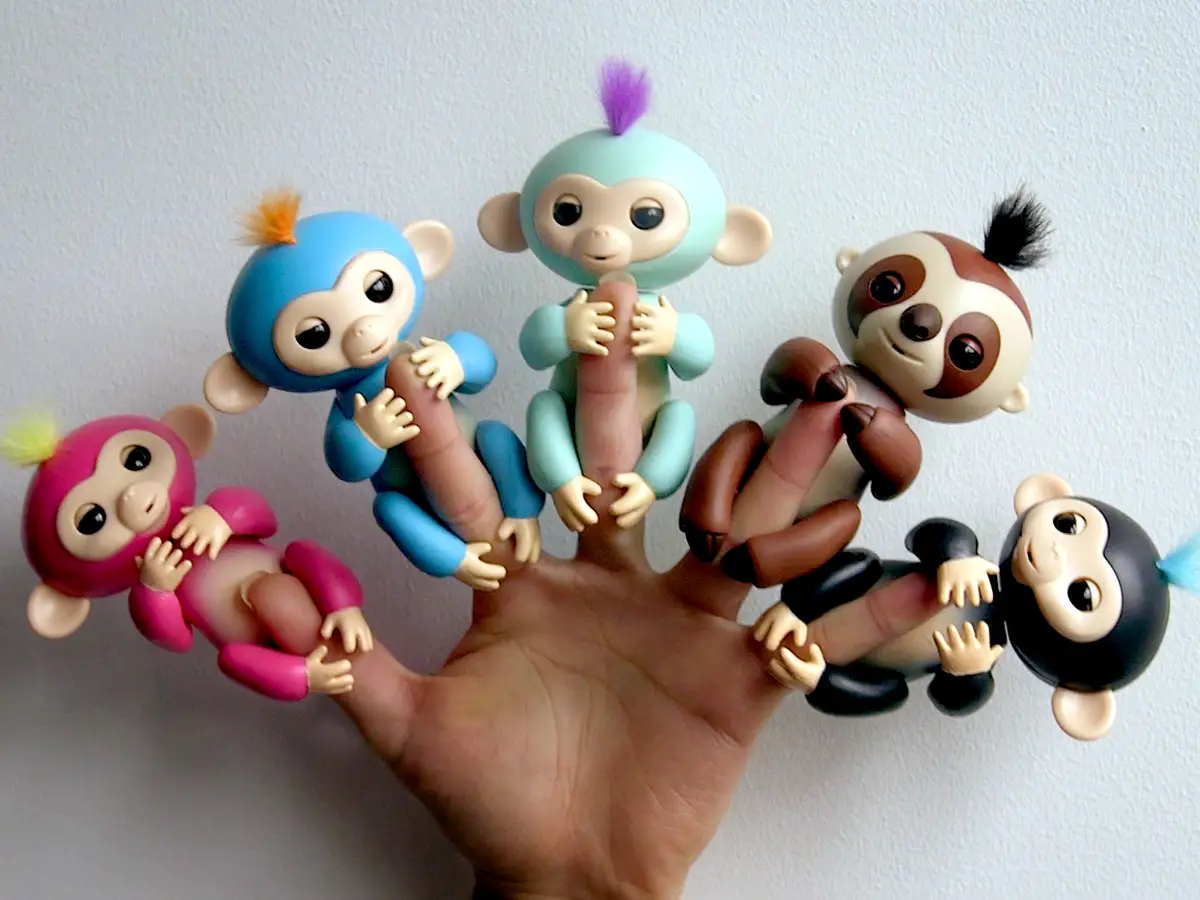
How many useful things are sitting unused in your home?
Most people have probably opened a cupboard, wardrobe, storage box, or spare room and found something they had completely forgotten about.
It might be a book you finished years ago. A kitchen appliance you bought for one specific recipe. A jacket that no longer fits. A piece of furniture that has been waiting for a "future project." Or a hobby item from an interest you no longer have.
These things may not seem important when they are sitting quietly in storage, but many of them are still perfectly useful.
One of the simplest ways to make better use of what we already own is to look at unused belongings differently. Instead of asking only whether you still want something, ask whether somebody else could use it.
That could mean selling it, donating it, swapping it, lending it, repairing it, or simply putting it back into use.
In this article, we look at five types of items that can easily end up sitting unused at home and explore what you can do with them.
1. Books you have already read
Books are one of the easiest examples of something that can remain useful even after the first owner has finished with it.
You may have a shelf filled with novels you have already read, textbooks from an old course, travel books from a previous trip, cookbooks you rarely open, or hobby books connected to an interest you have moved on from.
There is nothing wrong with keeping books that are meaningful to you. Some books have sentimental value, contain important references, or are simply worth keeping for future reading.
But there may also be books that you genuinely do not expect to read again.
Why books are good candidates for reuse
Books are relatively easy to store and transport, and their usefulness does not necessarily disappear simply because the first reader has finished them.
A book you have already read may be exactly what another person is looking for.
For example, you might have:
- fiction you no longer plan to reread,
- children's books your family has outgrown,
- cookbooks you no longer use,
- language-learning books you have finished,
- hobby books from an old interest, or
- books that were purchased for a course or project that has ended.
What can you do with unused books?
You can swap them for other books, donate them to another reader, give them to a community organization, or pass them directly to someone who is interested in the subject.
You can also create a small themed bundle.
For example:
Collection of five beginner cooking books in good used condition. No missing pages. Some covers show normal signs of wear. Interested in swapping for fiction, travel books, or other cooking-related titles.
The important thing is to describe the books accurately and mention any significant condition issues.
2. Clothes that no longer get worn
Clothing is another category where items can remain perfectly usable even though the original owner has stopped wearing them.
A wardrobe can gradually accumulate clothes for many reasons.
Something may no longer fit. Your style may have changed. You may have bought a replacement. A particular item may have only been suitable for one season or type of event.
None of that necessarily means the item has reached the end of its useful life.
Look for the clothes you keep "just in case"
Take a look at clothing that has spent months or even years hanging in the wardrobe without being worn.
You might find:
- jackets,
- sweaters,
- shirts,
- jeans,
- dresses,
- sportswear,
- shoes, or
- seasonal clothing.
Some of these items may genuinely be worth keeping. Others may be taking up space without serving any purpose.
Condition matters
Before giving away or swapping clothing, check it carefully.
Look for:
- stains,
- tears,
- missing buttons,
- damaged zippers,
- fading, and
- other visible wear.
Clean the clothing before offering it and describe its actual condition honestly.
A garment does not need to be perfect to be useful, but the next person should know what they are receiving.
Measurements can help
Clothing sizes are not always consistent between brands and styles.
Adding measurements such as chest width, waist measurement, length, or inseam can make it easier for another person to judge whether the item might fit.
This is especially useful for online exchange listings.
3. Kitchen appliances and gadgets that rarely get used
Kitchens can be surprisingly good places to find unused items.
A new appliance can seem extremely useful when you first buy it. Over time, however, you may discover that you use it only occasionally—or not at all.
You might have:
- a sandwich maker,
- a blender,
- a coffee machine,
- a food processor,
- a baking appliance,
- a kettle,
- a slow cooker, or
- specialized kitchen equipment.
Sometimes the appliance is still in excellent condition simply because it has not been used very much.
Ask yourself how often you actually use it
A useful question when decluttering the kitchen is:
When was the last time I actually used this?
If the answer is "I can't remember," it may be worth considering whether someone else could make better use of it.
This is particularly true when you own several appliances that perform similar tasks.
Check functionality before giving it away
For electrical kitchen equipment, make sure you know its actual condition.
If it works normally, say so.
If it has a known issue, mention it.
If it has not been tested recently, be clear about that as well.
For example:
Small blender in good used condition. It was working normally the last time it was used, but it has been stored for several months and has not been tested recently. Original container and lid included.
That gives the recipient useful information without making assumptions.
Do not forget accessories
Kitchen appliances often depend on additional parts.
Check for:
- power cables,
- cups or containers,
- lids,
- blades,
- attachments,
- measuring accessories, or
- other important components.
If something is missing, mention it in the listing.
4. Furniture that no longer fits your space
Furniture often stays in a home long after it stops being useful.
Perhaps you moved to a smaller apartment. You changed your room layout. You replaced a desk. Your children outgrew a particular piece. Or you simply bought something that works better for your current needs.
The old piece may still be perfectly usable.
Common examples include:
- desks,
- chairs,
- bookshelves,
- coffee tables,
- bedside tables,
- storage units,
- small cabinets, and
- other household furniture.
Furniture is often a space problem before it is a condition problem
One useful question is:
If I had more space, would I still want to keep this?
If the answer is no, the furniture may be ready for a new home.
That does not mean it needs to be thrown away.
Someone moving into a new apartment may need exactly the desk, shelf, or cabinet that you no longer have room for.
Dimensions are essential
When listing furniture, include the important dimensions.
For example:
Dimensions: 120 cm wide × 60 cm deep × 75 cm high.
Also mention whether the furniture can be disassembled.
This can make it much easier for someone to determine whether they can transport and use it.
Show the real condition
Furniture can have normal signs of use without being unsuitable.
Small scratches, faded areas, or minor marks can be acceptable to another person.
The important thing is to mention them and photograph them clearly.
5. Hobby equipment from interests you no longer pursue
Hobbies can change over time.
One year you might be interested in photography. Another year you might spend your free time painting, cycling, gardening, cooking, crafting, gaming, or working on another project.
Those changing interests can leave behind equipment that is still perfectly usable.
You might have:
- art supplies,
- craft materials,
- board games,
- puzzles,
- gardening tools,
- photography accessories,
- sports equipment, or
- other hobby-related items.
Your old hobby could be someone else's new hobby
This is one of the most interesting things about passing on hobby equipment.
An item that represents the end of one person's interest may represent the beginning of another person's.
A set of art supplies sitting unused in a cupboard could help someone start painting.
A board game that has not been played for years could become a family's favorite game.
A collection of books and equipment from an old hobby could help someone explore the same interest for the first time.
Describe sets carefully
If you are offering a hobby set, explain what is included.
For example:
Beginner watercolor set with brushes, palette, paints, and three unused sheets of watercolor paper. Paints have been opened but are still usable. One brush shows some wear.
This is much more useful than simply saying:
"Old painting stuff."
Why do useful items become unused?
There are many ordinary reasons why an item stops being used.
People move to new homes. Their interests change. Their families grow. Their routines change. They replace products. They receive duplicates. They buy something that turns out to be less useful than expected.
None of these situations means that the item is worthless.
It simply means that the item may no longer be useful to its current owner.
Needs change faster than objects wear out
An important part of reuse is recognizing that the useful life of an item can be longer than its usefulness to a particular person.
A jacket can outlast the person who used to wear it.
A bookshelf can outlast the room it used to stand in.
A board game can outlast the family that played it regularly.
A kitchen appliance can outlast the recipe it was originally purchased to make.
This creates an opportunity for the item to move to someone else.
Look beyond these five categories
The five categories in this article are only a starting point.
When you look around your home, you may also find:
- office supplies,
- decorative objects,
- storage containers,
- musical accessories,
- tools,
- children's books and toys,
- small household appliances,
- sports accessories, or
- other useful items that are simply no longer needed.
The same basic question applies to all of them:
Could someone else use this?
Try a "one shelf at a time" decluttering method
You do not have to reorganize your entire home in one weekend.
A simple approach is to work through one small area at a time.
Choose:
- one shelf,
- one drawer,
- one cupboard,
- one wardrobe section, or
- one storage box.
For each item, ask whether you still use it.
You can then place items into simple categories:
- Keep: I still use this.
- Swap: Someone else may have something I want.
- Donate: I do not need anything in return.
- Repair: It could be useful after a reasonable repair.
- Recycle or dispose: It is no longer reasonably usable.
This makes decluttering more manageable.
Do not confuse "unused" with "ready to throw away"
An item that has not been used for a year is not automatically waste.
Some objects are used only occasionally. Others are seasonal. Some are kept for specific purposes.
The goal is not to get rid of everything you rarely use.
The goal is to identify things that genuinely no longer serve a purpose for you and consider whether they could be useful elsewhere.
Think about the item's remaining useful life
Before getting rid of an item, ask what life it still has left.
For example:
- Does the chair still provide a stable seat?
- Does the book still contain its pages?
- Does the jacket still provide useful clothing?
- Does the appliance still perform its intended function?
- Does the hobby equipment still work?
If the answer is yes, there may be a reason to pass it on rather than discard it.
Sometimes a repair is all that is needed
An item can sit unused simply because it has a small problem.
A loose screw, broken button, damaged zipper, missing handle, worn cable, or similar issue may sometimes be repairable.
Before deciding that something is useless, consider whether a reasonable repair could restore its usefulness.
For significant electrical, structural, or safety-related problems, use appropriate professional help rather than attempting a repair that could be dangerous.
Consider swapping items instead of buying more
Suppose you discover several useful objects that you no longer need.
Before putting them back into storage, consider whether you could use them to obtain something you actually want.
For example:
- books you have read could become books you have not read,
- unused hobby equipment could become another hobby item,
- a spare piece of furniture could become storage you need,
- unwanted kitchen equipment could become another useful household item, or
- clothing you no longer wear could be exchanged for a different size or style.
This is where swapping can turn decluttering into something productive.
Consider donating when you do not need anything in return
Not every item needs to be exchanged.
Sometimes the simplest choice is to pass it on to someone who can use it.
Donation can make sense when:
- you no longer need the item,
- you do not particularly want another item in return, and
- the object is still genuinely useful.
As with swapping, describe the condition honestly and make sure the item is appropriate to give away.
Make unused items easier to evaluate
Sometimes people keep things simply because they are unsure what to do with them.
A simple description can make a decision easier.
For example:
Item: Wooden bookshelf
Condition: Good used condition with several minor scratches.
Dimensions: 80 × 30 × 180 cm.
Included: Five shelves.
Reason for giving away: No longer fits in the current room.
Once you write this information down, you may realize that the item is still perfectly usable.
Take photographs before deciding
Photography can also help you evaluate an unused item.
Take a clear photo and look at it as if you were seeing the object for the first time.
Ask:
- Does it look usable?
- Is the condition obvious?
- Would another person understand what it is?
- Are there any important defects?
- Could someone realistically use it?
This perspective can help you move away from the idea that an object is "just clutter."
The value of an item can change between owners
An item's usefulness is not necessarily fixed.
You may have no use for a particular object while another person needs exactly that thing.
For one household, a desk may be too small.
For another, it may be the perfect size.
One person may have finished with a collection of books.
Another person may be looking for those exact titles.
One person may have stopped painting.
Someone else may be looking for beginner art supplies.
This difference in needs is one of the reasons reuse and swapping can work.
What should you do first?
If this article has made you think about things sitting unused around your home, do not feel that you need to declutter everything immediately.
Start with one small area.
Find five items that you have not used recently.
For each one, ask:
- Do I still need it?
- Is it still usable?
- Could another person use it?
- Would I be willing to swap it?
- Would I rather donate it?
- Does it need repair first?
- Should it be recycled or disposed of instead?
You may find that one or two items have an obvious next step.
A simple five-item challenge
Try this simple exercise the next time you have a few minutes.
Choose five items from different parts of your home.
For example:
- one book,
- one item of clothing,
- one kitchen item,
- one small household object, and
- one hobby item.
Place them somewhere visible for a day.
Instead of putting them back immediately, decide what you genuinely want to do with each one.
Perhaps you will keep one.
Perhaps another needs repair.
Perhaps one can be donated.
Perhaps another can be swapped.
Even this small exercise can help you become more aware of how many useful things may be sitting unused.
Do not let "I paid for it" make the decision for you
One reason people keep unused objects is that they remember what they originally paid for them.
That feeling is understandable.
However, the money has already been spent.
The more useful question today is whether the item is still providing value to you.
If it is not, another person may be able to use it instead.
Keeping something unused simply because it once cost money does not recover that cost.
Passing it on may at least allow the object to continue being useful.
Do not keep something only because it might be useful someday
"Someday" can be a powerful reason to keep things.
Sometimes that reasoning is justified. You may genuinely need a seasonal item later or have a specific project planned.
But if "someday" has been repeated for years and there is still no realistic plan to use the item, it may be time to reconsider.
Ask yourself:
Do I have a realistic future use for this, or am I keeping it because I feel bad getting rid of it?
That question can reveal the difference between useful storage and permanent clutter.
Passing an item on can be more useful than keeping it hidden
An object sitting in a storage box cannot help anyone while it remains unused.
Once you swap, donate, lend, or otherwise pass it on, it has another opportunity to be useful.
That can be a practical benefit for both households.
Your unused item leaves your storage space, and someone else gets access to something they may need.
Final thoughts
Unused items are easy to overlook.
They sit quietly on shelves, inside cupboards, at the back of wardrobes, under beds, or in storage rooms until they become part of the background.
But many of those objects may still have plenty of useful life left.
Books can be read again by someone else. Clothing can be worn by a new owner. Kitchen appliances can help another household. Furniture can fit perfectly into a different room. Hobby equipment can help someone start or continue an interest.
The five categories in this article are only examples. The same principle can apply to many other everyday belongings.
Before putting an unused item back into storage, take a moment to ask:
Do I still need this, or could someone else make better use of it?
If you no longer need it, you have several options.
You can repair it. You can reuse it. You can swap it. You can donate it. You can lend it. Or, when it is no longer reasonably usable, you can look for the appropriate recycling or disposal option.
The important thing is to think beyond the simple choice of "keep" or "throw away."
Sometimes the next life of an item is waiting for another person.
Take a look around your home. You may already have something that someone else has been looking for.
You may also like

Sustainable Alternatives to Buying New
There are many ways to get the things you need without always buying them new. Discover practical alternatives such as swapping, donating, buying used, repairing, borrowing, renting, and reusing what you already own.
How to Donate Unwanted Items
Learn how to donate unwanted items in a way that is useful to other people and responsible for the environment. From choosing what to donate and checking condition to cleaning, photographing, describing, and arranging handover, this guide explains how to give your unused belongings a second life.